
BUTLER HIGH SCHOOL
FROM REBELS TO ROYALS
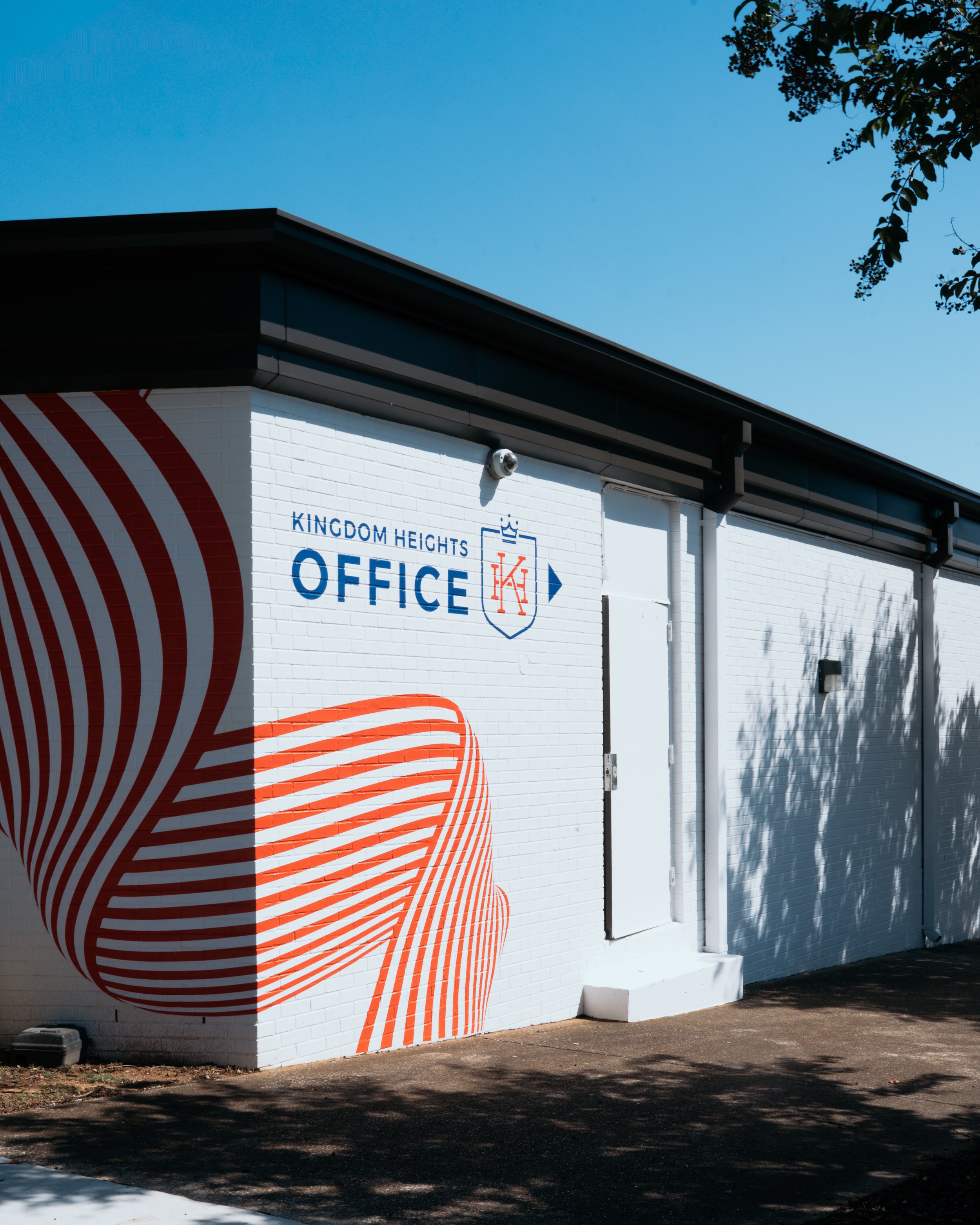
Kingdom Heights Preparatory School is writing a new chapter on a campus with a long history of educating Huntsville's young people.
Before these halls became home to The Rock Family Worship Center and Kingdom Heights, they belonged to S.R. Butler High School- a school whose story stretches from postwar Huntsville through the Space Age, school integration, decades of academic and athletic life, and generations of students who called Butler home.
We are grateful to inherit a place that has meant so much to so many, and we want its history to be remembered.
A school named for an educator
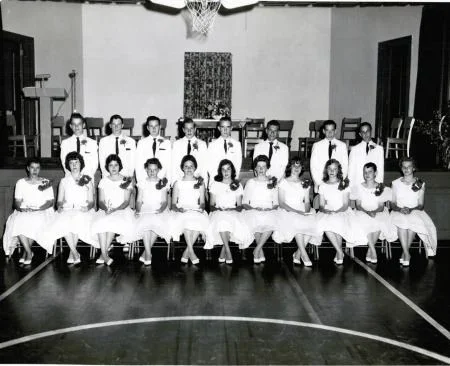
S.R. Butler High School was established in 1951 by the Madison County School System through the consolidation of five county high schools: Rison, West Huntsville, Joe Bradley, Madison, and Lincoln. Dr. J. Homer Crim became the school's first principal. The school initially occupied the former West Huntsville High School campus on Clinton Avenue.
The new school was named for Samuel Riley Butler, a longtime Huntsville and Madison County educator. Born in 1868, Butler graduated from Winchester Normal College in 1890 and spent roughly four decades in local education, serving in leadership roles in both Huntsville and Madison County schools and operating his own school for a period.
As Huntsville expanded westward, Butler became part of Huntsville City Schools in 1956.
Growing with the Rocket City
Butler's early decades coincided with extraordinary growth in Huntsville. Redstone Arsenal, Marshall Space Flight Center, annexation, and the city's rapidly expanding population created demand for larger schools and new facilities. By the 1960s, a new home was needed for Butler.
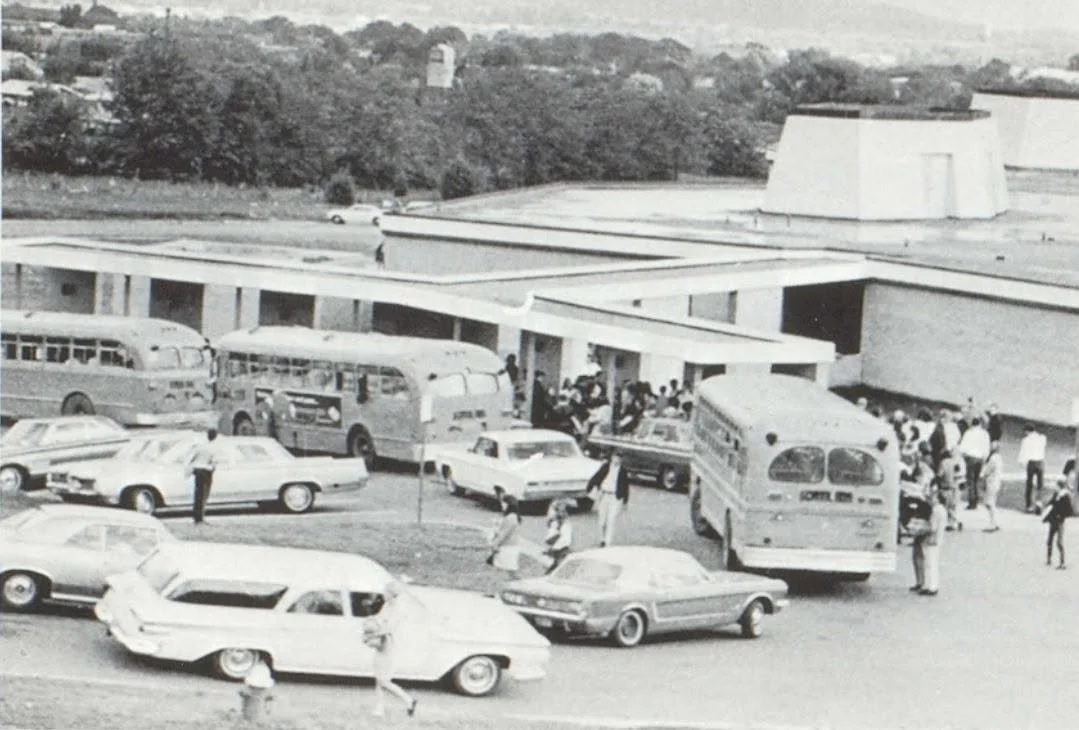
In the fall of 1967, S.R. Butler High School moved from Clinton Avenue to a newly constructed campus on Holmes Avenue—the campus now occupied by The Rock Family Worship Center and Kingdom Heights Preparatory School. The first senior class graduated from the new campus in 1968.
The original Clinton Avenue building became Roy L. Stone Junior High School, later Stone Middle School. That property is now part of Campus No. 805.
The new Holmes Avenue Butler campus was designed by Northington, Smith, Kranert & Associates. In 1968, the project received the highest Honor Award from the Alabama State Council of the American Institute of Architects. Contemporary architectural reporting also noted that Butler had been selected as one of 28 outstanding school projects from approximately 350 projects considered nationally that year.
By the 1970s, Butler's enrollment had grown to more than 3,000 students. Its Alabama Historical Association marker remembers the school's academic and athletic accomplishments and the generations of graduates who entered fields including sports, business, medicine, and the arts.
Integration and a changing student body
Butler's history also intersects with one of the most significant periods in Huntsville's history.
In the spring of 1964, two Black students began attending Butler, making it one of the first Huntsville public high schools to integrate.
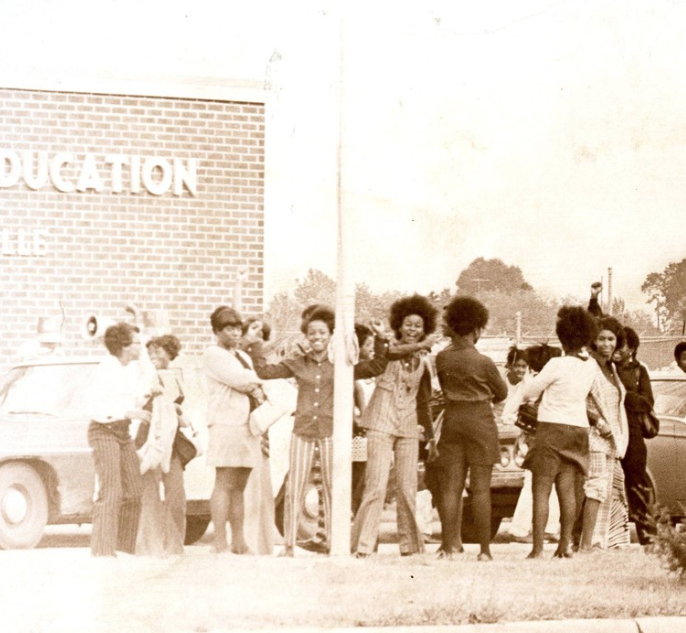
The transition was not always peaceful. Butler's teams were then known as the Rebels, and Confederate flags and the song Dixie were associated with school events. Amid racial conflict at the school, federal Judge H.H. Grooms ruled in 1971 that Confederate flags could no longer be displayed and Dixie could no longer be used at school events. Students demonstrated both in opposition to and in support of those changes. Contemporary photographs of those demonstrations are preserved by the Alabama Department of Archives and History.
But there is another part of that story worth telling. Sonnie Hereford IV, who in 1963 had become the first Black child to integrate a previously all-white public school in Alabama, later attended Butler and became its student body president. Huntsville histories have pointed to his election as one measure of how dramatically the school system had changed over the intervening decade.
The Final Bell
1951–2015
S.R. Butler High School closed at the end of the 2014–2015 school year, after 64 years.
Its closure formed part of a larger Huntsville City Schools rezoning and student-assignment plan developed under the federal desegregation case that had governed the district for decades. The federal court approved a consent order in April 2015 establishing new feeder patterns and student assignments; Butler's closure was part of that restructuring.
On May 22, 2015, Butler's final graduating class crossed the stage.

A New Steward for the Campus
After Butler closed, The Rock Family Worship Center purchased the former high school property from Huntsville City Schools in 2016 as a new home for its growing Huntsville congregation.
Rather than demolishing the former school, The Rock began adapting it for new use. Renovation began in 2017, including the transformation of Butler's competition gymnasium into a worship center seating nearly 1,600 people. The architectural renovation was completed in 2018.
The purpose of the campus changed. Its place in the life of the community did not.

A new generation fills the halls
In August 2024, Pastors Scott and Britt Silcox announced The Rock's vision to establish a K–12 Christian school on the former Butler campus. Renovations began that fall, and Kingdom Heights Preparatory School welcomed its inaugural students on August 6, 2025.
Once again, classrooms, labs, arts spaces, athletic facilities, and hallways on the Holmes Avenue campus are being used for the education and formation of young people.
Kingdom Heights is a new school, with its own mission and identity. But we do not begin on an empty page.
We are grateful for the educators, families, and thousands of Butler students whose lives are part of this place. As we prepare another generation to learn, lead, serve, and build, we do so with gratitude for those who walked these halls before us.
A historic campus. A new generation. A story still being written.